logo

Ultrasonic Tech Enhances Industrial Safety Standards

September 20, 2026

أحدث مدونة للشركة حول Ultrasonic Tech Enhances Industrial Safety Standards

Core Technology Overview

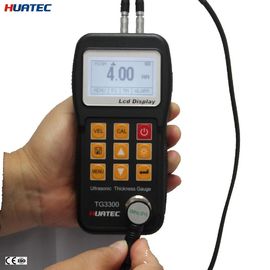
Ultrasonic thickness gauges represent critical precision instruments in industrial non-destructive testing (NDT). These devices emit ultrasonic pulses and measure their reflection echoes within materials to calculate wall thickness through precise time-of-flight measurements. This non-invasive technology enables accurate thickness assessment of metals, plastics, and composite materials, playing an indispensable role in evaluating corrosion, wear, and structural integrity across industrial assets.

Measurement Principles and Operational Modes

The fundamental operation relies on capturing ultrasonic pulse transit times with nanosecond precision. Three primary measurement modes address different industrial scenarios:

Multiple-Echo Mode

Considered the industrial gold standard, this advanced method measures intervals between consecutive echoes to automatically exclude surface coatings from thickness calculations. This eliminates the need for removing protective paints or coatings before measuring underlying metal substrates.

Single-Echo Mode

Utilizing the time difference between initial pulse transmission and first echo reflection, this mode delivers optimal performance for bare surfaces or where coatings have been removed, particularly effective for detecting severe corrosion and pitting.

Echo-Echo Mode

This technique measures time differentials between two internal reflection echoes, maintaining coating penetration capability while excelling in complex backwall corrosion scenarios.

Industrial Applications and Equipment Selection

These instruments serve critical roles in high-risk sectors including oil and gas, shipbuilding, civil engineering, and plant maintenance. Equipment selection requires careful consideration of several factors:

  • Extreme Environment Adaptation: Intrinsically safe models with ATEX certification for explosive atmospheres, or specialized submersible gauges rated for 300-meter water depths.
  • Ergonomic Design: Wrist-mounted or belt-clip configurations with hands-free interfaces enhance efficiency in aerial work or confined spaces.
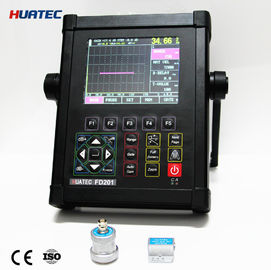
  • Advanced Data Capabilities: Modern units integrate A-Scan (waveform display) and B-Scan (cross-sectional imaging) functions, supporting USB/Bluetooth data export for statistical analysis and predictive maintenance.

Transducer Technology and System Integration

As the measurement sensor, transducer selection directly determines accuracy:

  • Single-Element Transducers: Delivering maximum precision for multiple-echo measurements, these excel in coating penetration applications.
  • Dual-Element Transducers: Optimized for single-echo or echo-echo modes, providing superior echo stability on heavily corroded surfaces.
  • High-Temperature Probes: Engineered for in-service equipment monitoring, enabling real-time thickness assessment of hot pipelines without operational shutdowns.

Quality Standards and Maintenance Protocols

Industrial-grade gauges must comply with international standards (ISO-9001). Proper operation requires material-specific calibration (single-point or two-point methods) with regular verification through data logging functions. Implementing scientific NDT protocols helps prevent catastrophic equipment failures while significantly reducing labor costs and material waste associated with disassembly inspections.

ابق على تواصل معنا
اتصل شخص : Mr. JingAn Chen
الهاتف : : 8610 82921131,86 13261934319
الفاكس : 86-10-82916893
الأحرف المتبقية(20/3000)